

 Dental Billing
 08-Apr-2026
Running a dental practice in the United States is a rewarding experience. You get to help patients smile with confidence and improve their oral health every day. However, behind the scenes, many dentists and office managers face a significant headache. That headache is dental billing.
Between complex insurance rules, changing codes, and delayed payments, managing the financial side of a practice can feel overwhelming. If claims are not handled correctly, your practice loses money. This is why understanding efficient dental billing solutions is so important. By sticking to a few core rules, you can streamline your workflow and get paid faster.
This guide breaks down the six essential fundamentals of dental billing. We will also look at how partnering with the right experts can transform your practice.
Dental billing has changed a lot over the years. In the past, a simple paper form might have been enough to get paid. Today, the process is much more digital and strict. Insurance companies have specific requirements for every claim. If one small detail is missing or incorrect, the insurance company will deny the claim.
For a busy front desk team, handling billing on top of greeting patients and answering phones is tough. When the staff is rushed, mistakes happen. These mistakes lead to a pile of unpaid claims and a cash flow problem. The good news is that you do not have to accept this chaos. By applying a structured approach, you can remove the stress from billing.
Dental billing is the process of submitting and following up on claims with insurance companies to receive payment for services rendered. It is not just about sending a bill; it is about managing the entire lifecycle of a claim from the moment the patient leaves the chair to the moment the money hits your bank account.
This process is vital because it is the financial lifeline of your practice. Without efficient billing, you cannot afford new equipment, pay your staff, or keep the lights on. In the broader healthcare industry, this is often referred to as revenue cycle management. For dental offices, utilizing specialized dental RCM services ensures that no money is left on the table due to administrative errors.
To simplify your billing process, you need to focus on six specific areas. Master these, and your revenue will become consistent and predictable.
The first fundamental happens before the patient even sits in the chair. This is called insurance verification. Many offices make the mistake of checking coverage quickly while the patient is checking in. This is too late.
You should verify every patient’s eligibility 2 to 3 days before their scheduled appointment. This gives you time to fix any issues. You need to check specific details during this step. Confirm that the patient’s insurance policy is active. Check their annual maximum to see how much money they have left for the year. You also need to verify their deductibles.
If you wait until the last minute, you might find out the insurance is inactive. This leads to awkward conversations with patients and potential lost revenue. A dedicated dental billing specialist knows exactly how to navigate insurance portals to get this information quickly, ensuring you are prepared before treatment starts.
Once the treatment is done, you must record it correctly using the right codes. In dentistry, we use CDT codes. Using the wrong code is a primary reason for claim denials. For example, there is a big difference between a regular filling and a complex crown buildup. If you code a buildup as a simple filling, you will likely get paid less money than you deserve.
However, coding is only half the battle. You must also support your claim with proper documentation. Insurance companies want proof that the treatment was medically necessary. This often includes X-rays, periodontal charting, and written notes from the dentist.
Sometimes, dental procedures can be submitted to medical insurance if they are related to trauma or medical conditions. In these complex cases, practices often rely on broader medical billing solutions to ensure the cross-coding is accurate. Always make sure your clinical notes match the code on the claim.
Speed is critical in dental billing. The longer you wait to submit a claim, the longer you wait to get paid. The best practice is to submit all claims electronically within 24 to 48 hours after the appointment.
Electronic submission is much faster and safer than mailing paper claims. When you send a claim electronically, the software checks for errors instantly. If a required field is missing, the system alerts you right away so you can fix it. This reduces the chance of the claim being rejected for simple typos.
Paper claims can get lost in the mail or sit on a desk at the insurance company for weeks. Electronic claims are received immediately. Using modern dental billing solutions that integrate with your practice management software makes this step automatic and error-free.
Submitting a claim does not mean the job is done. This is a common misconception. Many practices assume that once they hit "send," the insurance company will process and pay it automatically. This is not always true.
You must actively track your claims. This involves running an "Aging Report" regularly. This report shows you all claims that have not been paid yet, grouped by how old they are. You should look at claims that are 30, 60, and 90 days old.
If a claim is sitting at the 30-day mark with no payment, you need to investigate. Call the insurance company or check their online portal. Sometimes they need more information, or they have never received the claim. Consistent follow-up prevents old claims from being forgotten. A professional revenue cycle management company excels at this persistence, ensuring that no claim falls through the cracks.
Even with perfect preparation, some claims will be denied. A denial is not the end of the road. It is a signal that something needs to be fixed. You need a strong process for handling these denials.
When a claim comes back denied, do not just set it aside. Read the explanation of benefits (EOB) carefully to understand why. Common reasons include missing information, lack of medical necessity, or timely filing limits.
You must correct the error and resubmit the claim immediately. If the insurance company says a treatment is not covered, but you believe it should be, you need to write an appeal letter. This is where expert denial management services can be a huge help. They analyze patterns in your denials to fix the root cause so the same mistake does not happen again.
The final fundamental involves the patient. Insurance rarely covers 100% of the cost. There is usually a co-pay, a deductible, or a co-insurance amount that the patient owes.
Clear communication prevents collection problems later. You should explain the patient’s financial responsibility clearly before treatment begins. Provide an estimate of what the insurance will pay and what the patient will owe. This transparency builds trust.
When patients understand their benefits upfront, they are more likely to pay their portion on time. If there is a balance left after insurance pays, you need a system to collect it. This might involve sending monthly bills or using a third-party Patient Statement Service to handle the statements professionally.
When you apply these six fundamentals, the benefits to your practice are immediate.
First, your cash flow becomes steady. You stop wondering when checks will arrive because claims are processed the first time correctly. Second, your staff will be less stressed. They won't have to spend hours on the phone fixing simple mistakes that could have been prevented. Third, patient satisfaction increases. Patients appreciate clear financial conversations and accurate billing. Overall, your practice becomes more profitable and efficient.
Many dental offices try to handle billing in-house. However, as the practice grows, the workload becomes too much for the front desk. This is where outsourcing becomes a smart business decision.
Outsourcing allows you to hand over the complex billing tasks to a team of experts. Your front office can then focus entirely on patient care and scheduling. You also save money on the cost of hiring and training in-house billing staff.
When you outsource, you gain access to advanced technology and expertise that a small office might not afford on its own. A dedicated dental billing specialist who works with multiple clients knows the ins and outs of every major insurance provider. They know how to get claims paid faster.
If you decide to outsource, choosing the right partner is crucial. You want a company that understands the US dental market and uses the latest technology. Solutions like IntelliRCM can further enhance visibility and efficiency within your revenue cycle process.
Look for a partner that offers transparent reporting. You should be able to see exactly what is happening with your claims at any time. Ensure they provide comprehensive Dental RCM services that cover everything from verification to final collections, supported by platforms such as IntelliRCM for better tracking and insights.
Check their experience with your specific practice management software. Ask about their approach to denial management and patient collections. The right partner will feel like an extension of your team, working tirelessly to maximize your revenue, especially when they leverage intelligent systems like IntelliRCM to optimize performance.
Dental billing does not have to be a source of stress. By focusing on these six core fundamentals—verification, coding, electronic submission, tracking, denial management, and patient communication—you can create a smooth financial machine.
If managing all of this sounds like too much work for your current team, remember that help is available. Implementing professional dental billing solutions can give you back your time and peace of mind. Simplify your billing processes today so you can focus on what you do best: providing excellent dental care to your patients.

Track DSO, CEI, ADD, AR Turnover, and Aging to boost collections. Improve your revenue cycle management services with IntelliRCM. Get expert help today.
Read More
Virtual assistant technology has the potential to revolutionize patient engagement in healthcare, improving access to care, enhancing patient satisfaction, and ultimately driving better health outcomes. By embracing these innovative technologies and addressing the associated challenges, healthcare providers can unlock the full potential of virtual assistants to transform the patient experience and improve the quality of care.
Read More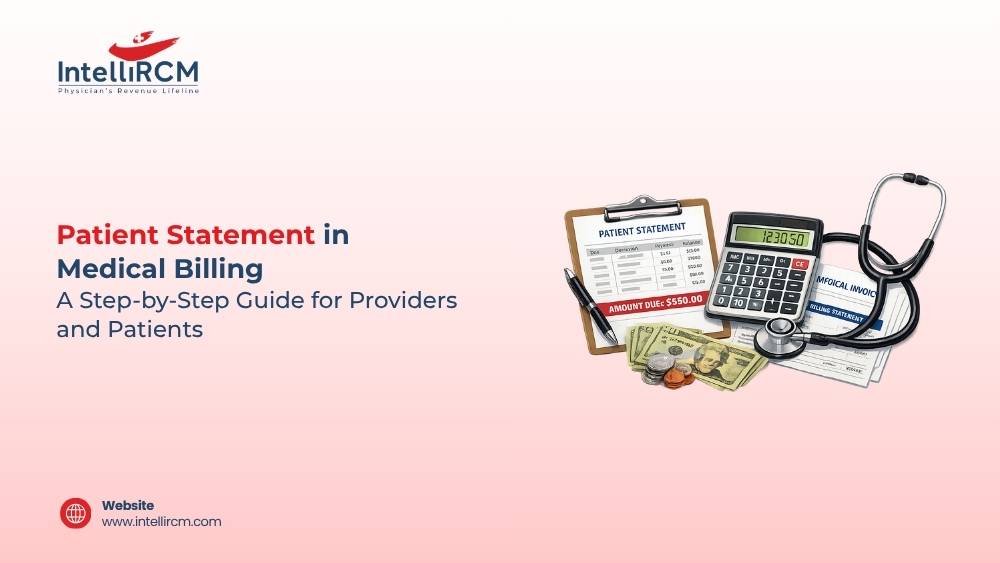
A patient statement in medical billing shows what you owe after insurance. Learn how it works and how IntelliRCM improves your collections today.
Read More